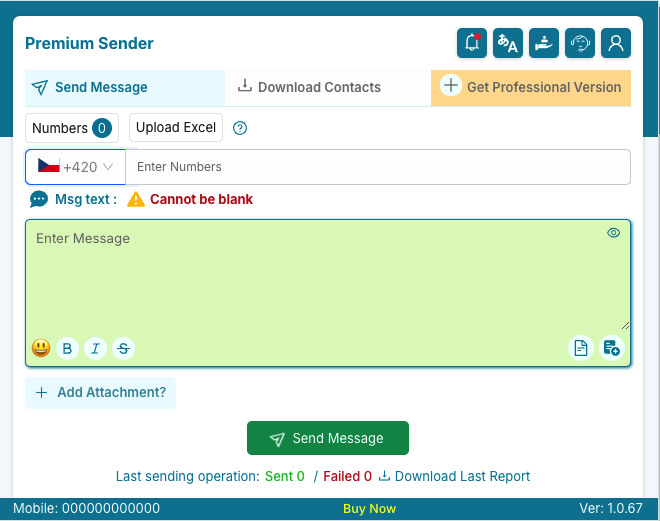
PremiumSender supercharges your messaging capabilities to help you instantly connect with your subscribers. Effortlessly send unlimited personalized messages to all your contacts in just three clicks. Experience seamless communication with our user-friendly and powerful bulk messaging extension.

We work around the clock to assist you. Drop us a message any time, and one
of us will be
happy to get back to you quickly!
always available via Email

satisfaction rate
avg. response time
Read the book with Excel open. Recreate every table and formula yourself. That is where the real learning happens.
You need a reliable, formula-heavy reference to pass a university exam or perform a serious financial feasibility study. Skip this PDF if: You want a modern, visually engaging guide to agile project management or soft skills. gestion y evaluacion de proyectos juan manuel izar pdf
Unlike theoretical treatises, Izar peppers each chapter with mini-cases based on real-world Ibero-American industries (manufacturing, services, and agribusiness). The PDF format allows you to keep these cases open on one screen while working through the math on another. The exercises are cumulative—you will build a complete project evaluation from scratch by the final chapters. Read the book with Excel open
Most introductory books stop at NPV/IRR. Izar dedicates significant space to análisis de sensibilidad , punto de equilibrio , and even introduces probabilistic risk assessment using simple distributions. This is critical because it teaches the reader that a project is not a static spreadsheet but a dynamic system vulnerable to changes in sales volume, cost of capital, or raw material prices. You need a reliable, formula-heavy reference to pass
This is a book about evaluation (feasibility, finance, ROI), not execution management. Do not expect coverage of Scrum, Kanban, or even detailed sections on Gantt charts and PERT/CPM beyond the basics. If you need a PMBOK-style guide to leading teams, look elsewhere. If you need to decide whether to build a factory, this is your book.
Topic: Gestión y Evaluación de Proyectos (Project Management and Evaluation) Author: Juan Manuel Izar Landeta Format Focus: PDF (Digital Distribution) Overall Impression: A Rigorous, Math-Driven Classic If you are searching for a flashy, design-heavy PMP certification guide filled with colorful infographics, this is not that book. Instead, Juan Manuel Izar’s "Gestión y Evaluación de Proyectos" is a methodical, almost austere, textbook that has become a staple in many Spanish-speaking university engineering and business administration programs. The PDF version preserves the structured, formula-heavy nature of the original, making it an excellent reference for students and professionals who need to master the financial and quantitative side of project evaluation. Strengths: Where the Book Excels 1. Deep Focus on Financial Evaluation (The Core Strength) The book’s crown jewel is its treatment of evaluación financiera . Izar does not just define NPV (Net Present Value), IRR (Internal Rate of Return), or ROI; he walks you through the mathematical logic behind each formula. Chapters on inflation, working capital, and depreciation are particularly robust. For anyone struggling to understand why a project with high profits can still fail due to poor cash flow timing, this PDF provides the clearest, most step-by-step explanations found in Spanish-language literature.
Izar writes like the professor he is. Sentences are long, definitions are formal, and there is little hand-holding. The PDF can feel intimidating to undergraduates or practitioners without a solid foundation in basic algebra and financial accounting. You will need to work through the examples with a calculator or Excel open.
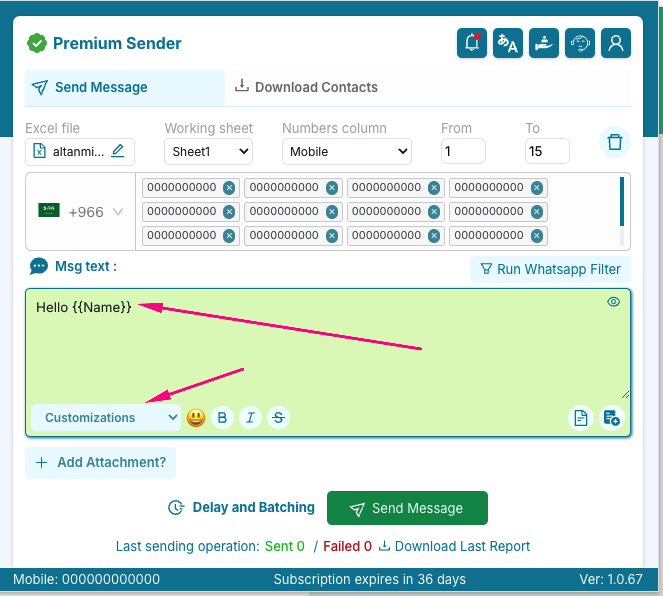
Send single or multiple customizable messages to your customers

Active Support

Personalized
Messages

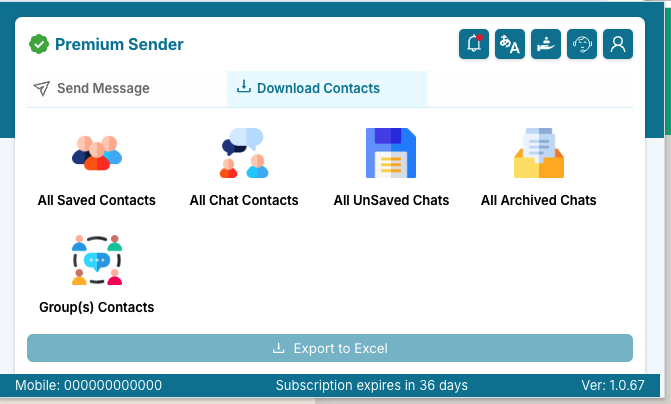
Download Delivery
Reports

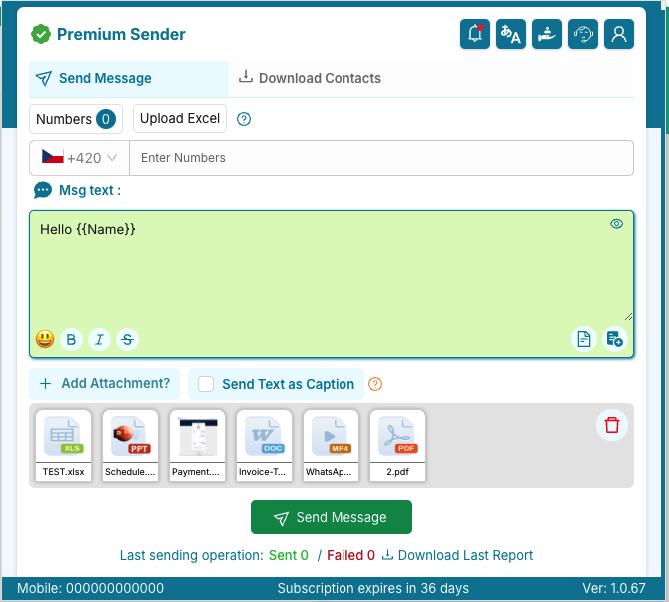
Send Media
Read the book with Excel open. Recreate every table and formula yourself. That is where the real learning happens.
You need a reliable, formula-heavy reference to pass a university exam or perform a serious financial feasibility study. Skip this PDF if: You want a modern, visually engaging guide to agile project management or soft skills.
Unlike theoretical treatises, Izar peppers each chapter with mini-cases based on real-world Ibero-American industries (manufacturing, services, and agribusiness). The PDF format allows you to keep these cases open on one screen while working through the math on another. The exercises are cumulative—you will build a complete project evaluation from scratch by the final chapters.
Most introductory books stop at NPV/IRR. Izar dedicates significant space to análisis de sensibilidad , punto de equilibrio , and even introduces probabilistic risk assessment using simple distributions. This is critical because it teaches the reader that a project is not a static spreadsheet but a dynamic system vulnerable to changes in sales volume, cost of capital, or raw material prices.
This is a book about evaluation (feasibility, finance, ROI), not execution management. Do not expect coverage of Scrum, Kanban, or even detailed sections on Gantt charts and PERT/CPM beyond the basics. If you need a PMBOK-style guide to leading teams, look elsewhere. If you need to decide whether to build a factory, this is your book.
Topic: Gestión y Evaluación de Proyectos (Project Management and Evaluation) Author: Juan Manuel Izar Landeta Format Focus: PDF (Digital Distribution) Overall Impression: A Rigorous, Math-Driven Classic If you are searching for a flashy, design-heavy PMP certification guide filled with colorful infographics, this is not that book. Instead, Juan Manuel Izar’s "Gestión y Evaluación de Proyectos" is a methodical, almost austere, textbook that has become a staple in many Spanish-speaking university engineering and business administration programs. The PDF version preserves the structured, formula-heavy nature of the original, making it an excellent reference for students and professionals who need to master the financial and quantitative side of project evaluation. Strengths: Where the Book Excels 1. Deep Focus on Financial Evaluation (The Core Strength) The book’s crown jewel is its treatment of evaluación financiera . Izar does not just define NPV (Net Present Value), IRR (Internal Rate of Return), or ROI; he walks you through the mathematical logic behind each formula. Chapters on inflation, working capital, and depreciation are particularly robust. For anyone struggling to understand why a project with high profits can still fail due to poor cash flow timing, this PDF provides the clearest, most step-by-step explanations found in Spanish-language literature.
Izar writes like the professor he is. Sentences are long, definitions are formal, and there is little hand-holding. The PDF can feel intimidating to undergraduates or practitioners without a solid foundation in basic algebra and financial accounting. You will need to work through the examples with a calculator or Excel open.
