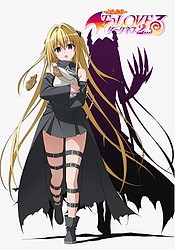
To LOVE-Ru
InstallmentsAboutHeadlines

V Vendetta Qartulad Apr 2026

Second, the political themes of V for Vendetta —a totalitarian state called “Norsefire” that uses fear, surveillance, and scapegoating to control society—strike a remarkably familiar chord in Georgia. Having endured centuries of Russian Imperial rule, a brief period of independence (1918-1921), Soviet occupation, and the tumultuous post-1991 era, Georgian society is acutely sensitive to narratives of state repression. The film version, in particular, with its Guy Fawkes mask, became a global symbol of protest movements, including in Georgia. During political crises, such as the 2007 and 2011 protests in Tbilisi, one could see the iconic mask appear. Thus, consuming V for Vendetta “qartulad” means experiencing it not as a foreign fantasy but as an allegory for local realities—the fear of a resurgent Russian influence, government corruption, and the delicate balance between security and liberty.

Alan Moore and David Lloyd’s graphic novel V for Vendetta , later adapted into a famous film, is a cornerstone of dystopian political fiction. When discussing this work “qartulad” (in Georgian), the topic extends far beyond simple linguistic translation. It opens a profound discussion about how a quintessentially British story about fascism, anarchy, and resistance finds a powerful and almost prophetic echo in the post-Soviet Georgian cultural and political landscape. This essay argues that translating V for Vendetta into Georgian is not merely a linguistic exercise but a cultural and political act that resonates deeply with Georgia’s own struggles against oppression, its fight for free expression, and its complex relationship with authoritarianism. v vendetta qartulad

In conclusion, the topic “V for Vendetta qartulad” is a gateway to understanding how global narratives are refracted through local experience. The translation process requires overcoming the barrier of the alliterative “V,” but the true adaptation happens in the minds of the Georgian audience. For a nation shaped by empire, Soviet rule, and ongoing geopolitical tension, V for Vendetta is not merely a dystopian fiction. It is a mirror reflecting Georgia’s own painful history and its enduring hope for liberty. Whether in the original English or in a carefully crafted Georgian version, V’s message remains clear: the power of an idea, once planted, cannot be extinguished—even by the most oppressive state. And that, in any language, is a dangerous and beautiful truth. Second, the political themes of V for Vendetta

Finally, the role of the citizen—Evey Hammond—is crucial in the Georgian context. Evey transforms from a frightened, compliant subject into a woman who chooses to face death rather than betray her principles. In Georgia, where civic activism has grown significantly since the Rose Revolution of 2003, Evey’s journey mirrors the ideal of the engaged citizen. The final scene, where thousands of ordinary Londoners march on Parliament wearing V’s mask, is a powerful image of collective action. For a Georgian reader or viewer, this scene is not abstract; it recalls the peaceful crowds on Rustaveli Avenue, standing against tanks or demanding fair elections. The phrase “People should not be afraid of their governments. Governments should be afraid of their people” resonates more deeply in a country that has had to fight for every inch of its democratic space. During political crises, such as the 2007 and

First, the linguistic challenges of translating V for Vendetta into Georgian highlight the uniqueness of the source material. The most iconic element of the story is the protagonist’s alliterative obsession with the letter “V.” In English, V-words abound: vendetta, violence, victory, verisimilitude. The Georgian script (Mkhedruli) has its own alphabet, but the letter “ვ” (vini) does not carry the same semantic weight or frequency as the English “V.” A direct translation would lose the poetic and rhythmic cadence of V’s speeches. A skilled Georgian translator must therefore engage in creative adaptation, perhaps using alliteration with other consonants or shifting to a thematic rhyme system. This process, known as localization , forces the translator to become a co-writer, ensuring that the character’s verbal identity survives the journey from Latin to Georgian script. Without this careful work, the very soul of “V” would be lost in translation.

Third, the character of V himself—a freedom fighter or a terrorist, depending on one’s perspective—invites a Georgian-specific ethical debate. Georgian history is filled with national heroes who used violent means against empire (e.g., Kakutsa Cholokashvili, who led an anti-Soviet guerrilla campaign). V’s methods are brutal: he blows up landmarks, assassinates officials, and kidnaps a young woman (Evey). A Georgian audience, familiar with the moral compromises of resistance movements, may judge V differently than a Western audience. They might see less of a mad anarchist and more of a tragic, necessary consequence of totalitarianism. The Georgian translation of V’s famous line, “Beneath this mask there is more than flesh. Beneath this mask there is an idea… and ideas are bulletproof,” becomes a rallying cry for a nation that has often survived on the power of cultural and political ideas against overwhelming physical force.


Second, the political themes of V for Vendetta —a totalitarian state called “Norsefire” that uses fear, surveillance, and scapegoating to control society—strike a remarkably familiar chord in Georgia. Having endured centuries of Russian Imperial rule, a brief period of independence (1918-1921), Soviet occupation, and the tumultuous post-1991 era, Georgian society is acutely sensitive to narratives of state repression. The film version, in particular, with its Guy Fawkes mask, became a global symbol of protest movements, including in Georgia. During political crises, such as the 2007 and 2011 protests in Tbilisi, one could see the iconic mask appear. Thus, consuming V for Vendetta “qartulad” means experiencing it not as a foreign fantasy but as an allegory for local realities—the fear of a resurgent Russian influence, government corruption, and the delicate balance between security and liberty.

Alan Moore and David Lloyd’s graphic novel V for Vendetta , later adapted into a famous film, is a cornerstone of dystopian political fiction. When discussing this work “qartulad” (in Georgian), the topic extends far beyond simple linguistic translation. It opens a profound discussion about how a quintessentially British story about fascism, anarchy, and resistance finds a powerful and almost prophetic echo in the post-Soviet Georgian cultural and political landscape. This essay argues that translating V for Vendetta into Georgian is not merely a linguistic exercise but a cultural and political act that resonates deeply with Georgia’s own struggles against oppression, its fight for free expression, and its complex relationship with authoritarianism.

In conclusion, the topic “V for Vendetta qartulad” is a gateway to understanding how global narratives are refracted through local experience. The translation process requires overcoming the barrier of the alliterative “V,” but the true adaptation happens in the minds of the Georgian audience. For a nation shaped by empire, Soviet rule, and ongoing geopolitical tension, V for Vendetta is not merely a dystopian fiction. It is a mirror reflecting Georgia’s own painful history and its enduring hope for liberty. Whether in the original English or in a carefully crafted Georgian version, V’s message remains clear: the power of an idea, once planted, cannot be extinguished—even by the most oppressive state. And that, in any language, is a dangerous and beautiful truth.

Finally, the role of the citizen—Evey Hammond—is crucial in the Georgian context. Evey transforms from a frightened, compliant subject into a woman who chooses to face death rather than betray her principles. In Georgia, where civic activism has grown significantly since the Rose Revolution of 2003, Evey’s journey mirrors the ideal of the engaged citizen. The final scene, where thousands of ordinary Londoners march on Parliament wearing V’s mask, is a powerful image of collective action. For a Georgian reader or viewer, this scene is not abstract; it recalls the peaceful crowds on Rustaveli Avenue, standing against tanks or demanding fair elections. The phrase “People should not be afraid of their governments. Governments should be afraid of their people” resonates more deeply in a country that has had to fight for every inch of its democratic space.

First, the linguistic challenges of translating V for Vendetta into Georgian highlight the uniqueness of the source material. The most iconic element of the story is the protagonist’s alliterative obsession with the letter “V.” In English, V-words abound: vendetta, violence, victory, verisimilitude. The Georgian script (Mkhedruli) has its own alphabet, but the letter “ვ” (vini) does not carry the same semantic weight or frequency as the English “V.” A direct translation would lose the poetic and rhythmic cadence of V’s speeches. A skilled Georgian translator must therefore engage in creative adaptation, perhaps using alliteration with other consonants or shifting to a thematic rhyme system. This process, known as localization , forces the translator to become a co-writer, ensuring that the character’s verbal identity survives the journey from Latin to Georgian script. Without this careful work, the very soul of “V” would be lost in translation.

Third, the character of V himself—a freedom fighter or a terrorist, depending on one’s perspective—invites a Georgian-specific ethical debate. Georgian history is filled with national heroes who used violent means against empire (e.g., Kakutsa Cholokashvili, who led an anti-Soviet guerrilla campaign). V’s methods are brutal: he blows up landmarks, assassinates officials, and kidnaps a young woman (Evey). A Georgian audience, familiar with the moral compromises of resistance movements, may judge V differently than a Western audience. They might see less of a mad anarchist and more of a tragic, necessary consequence of totalitarianism. The Georgian translation of V’s famous line, “Beneath this mask there is more than flesh. Beneath this mask there is an idea… and ideas are bulletproof,” becomes a rallying cry for a nation that has often survived on the power of cultural and political ideas against overwhelming physical force.

  1. Comedy
  2. Ecchi
  3. Harem
  4. School
  5. Sci-Fi
  1. XEBEC
Oct 5, 2010 at 7:00pm CEST

A year after Lala came to Earth, she is all the more determined to make Rito fall for her, putting all her effort into it, even though she knows that Rito actually loves Haruna. Poor Rito will have to face tough times since Lala's younger twin sisters, Nana and Momo, now live in the same house, along with Rito's reliable sister, Mikan, and Celine.

Fun and trouble await with their friends from school, with Lala's usually catastrophic inventions, and Yami's contract to kill Rito...

[Source: AniDB]

  1. Comedy
  2. Ecchi
  3. Harem
  4. Romance
  5. School
  6. Sci-Fi
  1. XEBEC
Oct 5, 2012 at 6:00pm CEST

As close encounters of the twisted kind between the residents of the planet Develuke (represented primarily by the female members of the royal family) and the inhabitants of Earth (represented mainly by one very exhausted Rito Yuki) continue to escalate, the situation spirals even further out of control. When junior princesses Nana and Momo transferred into Earth School where big sister LaLa can (theoretically) keep an eye on them, things SHOULD be smooth sailing. But when Momo decides she'd like to "supplement" Rito's relationship with LaLa with a little "sisterly love," you know LaLa's not going to waste any time splitting harems. Unfortunately, it's just about that point that Yami, the Golden Darkness, enters the scene with all the subtleness of a supernova, along with an army of possessed high school students! All of which is certain to make Rito's life suck more than a black hole at the family picnic. Unless, of course, a certain semi-demonic princess can apply a little of her Develukean Whoop Ass to exactly that portion of certain other heavenly bodies!

[Source: Sentai Filmworks]

  1. Comedy
  2. Ecchi
  3. Harem
  4. Romance
  5. School
  6. Sci-Fi
  1. XEBEC
Jul 6, 2015 at 5:00pm CEST

Rito Yuki has more women in his life than he knows what to do with. In case it wasn’t enough to have all three Devilukean princesses under one roof, he now has alien girls from all over the galaxy attending his school, too! But when the arrival of a mysterious red-haired girl threatens one of their own, Rito and the girls must stand up to a powerful adversary- the likes of which they’ve never seen before.

[Source: Crunchyroll]

  1. Comedy
  2. Ecchi
  3. Harem
  4. Romance
  5. School
  6. Sci-Fi
  1. XEBEC
Jan 4, 2016 at 1:00am CET

A scan of Jump SQ's September issue, to be released on August 4, revealed that the fifteenth volume of To LOVE-Ru Darkness will bundle a new OVA, which will be released on January 4. Consisting of two episodes, the OVA will run for a total of 25 minutes. One episode, titled Ghost Story Kowai no wa Ikaga (How about something scary?), will adapt a side-story from volume nine. The second episode, titled Clinic Sunao ni Narenakute (Without becoming obedient), will adapt chapter 38.

[Source: MyAnimeList News]

Advertisement